I’ve been collecting vinyl for decades, and never seen the market in such a precarious state. What started as a beautiful resurgence of interest in analog music has morphed into something that’s pricing out the very people who kept this format alive during its darkest days. As someone who’s watched this transformation unfold, I feel compelled to share what I’m seeing and why I’m genuinely worried about where we’re headed.
The death of the dig
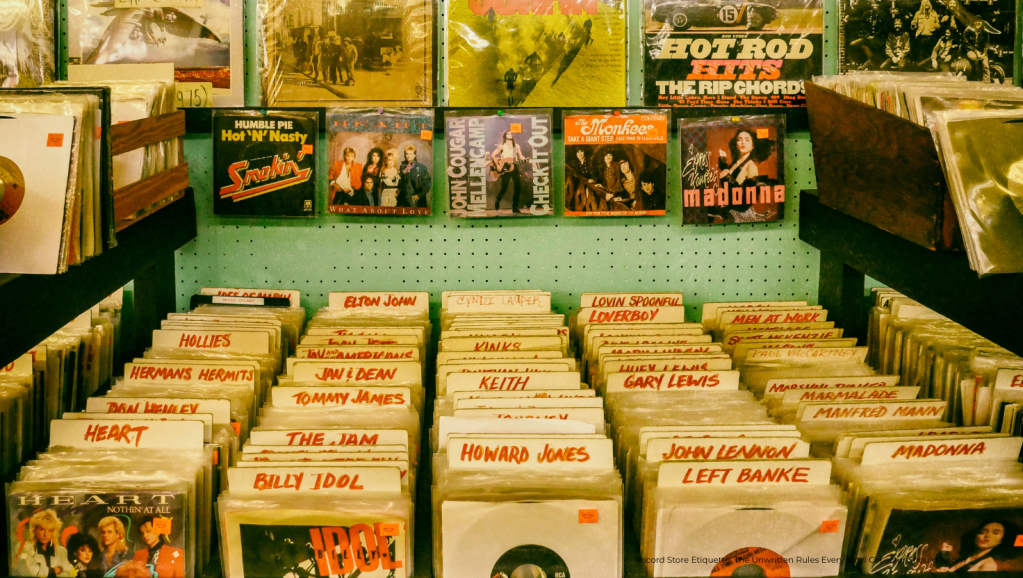
One of the places that a large portion of my collection came from was local second hand record stores. I used to be able to find things in there for $7 to $8 that most music stores would have for $25 or more. They had their bargain bin stuff that was $5 or less—stuff that music stores would toss in discount bin under their shelves and hoped someone would dig through it. When I say “Music” stores, I mean when CDs were the exclusive format and most people had moved on from vinyl, even though records were still kind of around…yeah I know, I’m showing my age, but I digress…..
I was in a second hand record store last week, and the experience was heartbreaking. I’ve seen the prices go up over the years, but this visit was different. I saw stuff that had been and should always be $5 bin records with $35 price tags. An absolutely beat up Rubber Soul repress with warped vinyl inside was tagged at $60! I couldn’t find anything worth buying, and the odd thing that tickled my fancy was double what it should be.
This isn’t just happening at my local stores—it’s everywhere. Thrift stores, garage sales, estate sales, flea markets. Places where music lovers used to go treasure hunting have become overpriced graveyards of common records with delusional price tags.
The collector vs. listener problem
The vinyl resurgence has created a misconception that every record automatically has value simply because it’s pressed on vinyl. What’s happening now goes beyond the traditional collector market we’ve always known. The fundamental difference is that today’s market is driven by profit expectations rather than musical passion.
This mentality shift has completely altered the vinyl landscape. The warning signs were clear when I started noticing people purchasing records as commodities rather than for their musical content. Albums that had been fixtures in thrift store bins for decades suddenly gained “collectible” status overnight. What were once overlooked records gathering dust have transformed into speculative investments in many people’s minds.
The Discogs dilemma
Discogs has become a nessecary evil within the vinyl community and it has become the connection between everything. For some reason, people decided it was the ultimate authority, and as such, all secondary and non-retail pricing in the entire vinyl industry is now based on Discogs pricing. This has created a feedback loop where inflated prices become normalized simply because they’re listed on the platform.
Don’t get me wrong—Discogs serves a valuable purpose for rare and genuinely collectible items. But when every beat-up copy of “Frampton Comes Alive!” is priced like it’s a first pressing of “Pet Sounds,” we’ve lost all sense of perspective. The pandemic even created shortages in the raw materials needed for pressing, as home renovations consumed the same PVC used to make records. Learn more about supply chain issues.
The perfect storm
The current pricing crisis isn’t happening in a vacuum. Several factors have converged to create this perfect storm:
Manufacturing Bottlenecks: With only a handful of pressing plants worldwide, any disruption creates ripple effects. An anonymous source told Billboard that worldwide there was the capacity to manufacture just 160 million records a year, but to meet current demand that capacity would need to rise to between 300-400 million. When new releases take months to produce, demand for existing records intensifies, driving up prices across the board. Read more about the pressing plant shortage
Speculative Buying: Flippers and speculators monitor new releases and reissues, often purchasing multiple copies with the sole intention of reselling them at inflated prices. This artificial scarcity has turned vinyl collecting into a competitive marketplace where deep pockets win over deep musical knowledge.
The “Limited Edition” Trap: Record labels have caught onto the speculation game, creating artificial scarcity even for readily available source material. Colored vinyl variants, special packaging, and numbered editions have become standard practice, often doubling or tripling the cost of what should be straightforward reprints. An example of this can be seen with obsessive Taylor Swift fans going out of their way to buy copies of the same release in each color way, this in turn causes a massive spike in Discogs pricing which flippers then take advantage of.
Streaming’s Ironic Impact: As digital music has made physical media less essential for daily listening, vinyl has become positioned as a premium, collectible format. This shift in perception has justified higher price points across the board. The global vinyl market has grown from $1.8 billion in 2023 to a projected $3.4 billion by 2032, creating a feeding frenzy of speculation. See the market growth data
What we’re losing
These pricing pressures are doing real damage to the vinyl community:
New Collectors Are Priced Out: Young music fans face sticker shock when they discover that albums they want to own cost $50-80 or more. This creates a barrier to entry that threatens the long-term health of the format.
Musical Discovery Suffers: When records are expensive, buyers become conservative. Vinyl collectors are saying that higher prices are causing them to be more selective with the records they buy. They are more intentional, prioritizing quality over quantity and focusing on the records they want most. The days of taking a chance on an unknown artist or genre for a few dollars are disappearing, which ultimately hurts musical exploration.
The Joy of the Hunt Dies: The thrill of digging through bins and finding unexpected treasures—one of vinyl’s greatest pleasures—is being killed by unrealistic pricing expectations.
My perspective as a lifer
I’ve been through vinyl’s ups and downs. I was buying records when everyone said the format was dead, when you could find incredible albums for pocket change because nobody else wanted them. I understand that some price increases are inevitable as demand returns, but what we’re seeing now goes far beyond natural market forces.
The vinyl market’s current trajectory isn’t sustainable. We’re creating a hobby that’s increasingly elitist and exclusionary. Vinyl collecting used to be democratic—anyone could build a meaningful collection on a modest budget. Now it’s becoming a luxury hobby for people with unlimited disposable income.
Looking ahead
I still believe in vinyl’s power to connect us with music in a way that digital formats can’t match. But I’m worried we’re losing sight of what made this format special in the first place: the joy of musical discovery, the satisfaction of building a personal collection, and the simple pleasure of dropping the needle on a favorite album.
The market will eventually correct itself—it has to. But how much damage will be done in the meantime? How many potential collectors will we lose to prohibitive pricing? How many great records will sit unplayed in investors’ closets?
As someone who’s dedicated to this format, I refuse to accept that vinyl has to be expensive to be valuable. Music is meant to be heard, not hoarded. And if we lose sight of that fundamental truth, we’ll have lost something far more valuable than any pressing could ever be.
The vinyl renaissance brought many wonderful things to the music world, but it’s crucial that we don’t let pricing pressures destroy what makes this format special. We need to remember that the true value of vinyl lies not in its monetary worth but in its ability to connect us with the music we love.
That’s what I’m fighting for, and I hope you’ll join me.
Additional resources
For more insights into the vinyl market and manufacturing challenges:
- Grammy.com’s explanation of the vinyl shortage
- How inflation is changing record collecting
- The vinyl straw: Why the vinyl industry is at breaking point
Frank Penny writes about vinyl, music, and collecting culture at Rhythm Exchange Records. Follow along for more thoughts on keeping the joy of record collecting alive or feel free to comment with your thoughts.



 Rhythm Exchange Records
Leave a comment