Growing up as a young lad in a regional Australian town, I never thought of myself as being confined to one particular musical genre, although I did often find myself gravitating more towards the Metal albums whenever I hit the local record store in my early days of collecting.
During one of my regular browsing sessions I happened upon a copy of Talk Talk’s “The Colour of Spring”, someone had put it back in the heavy metal section by mistake, or more likely they just couldn’t be arsed putting it back in the New Wave section.
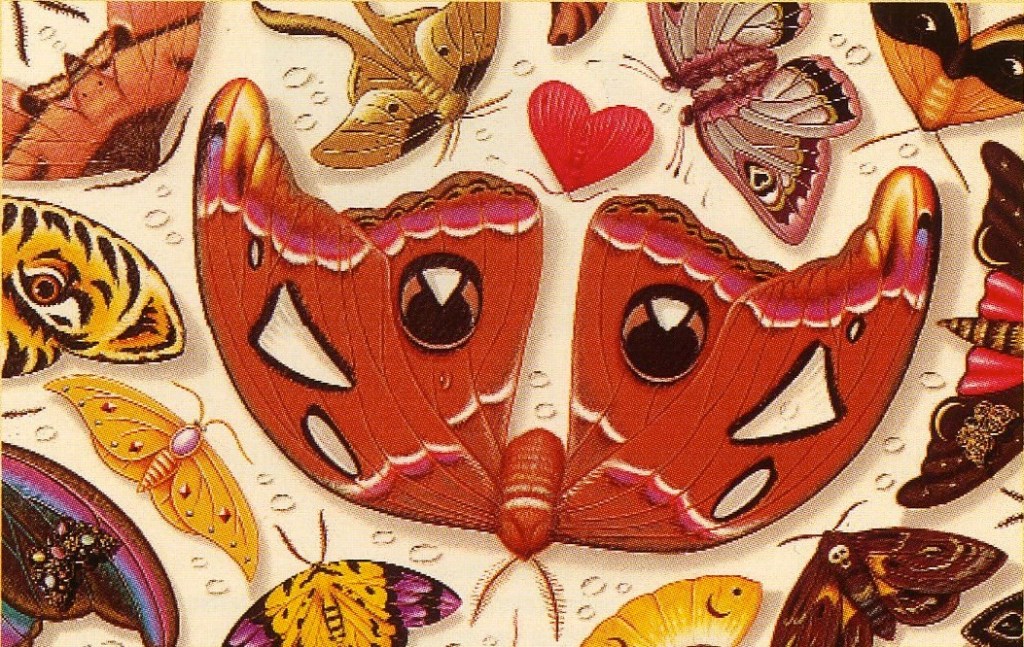
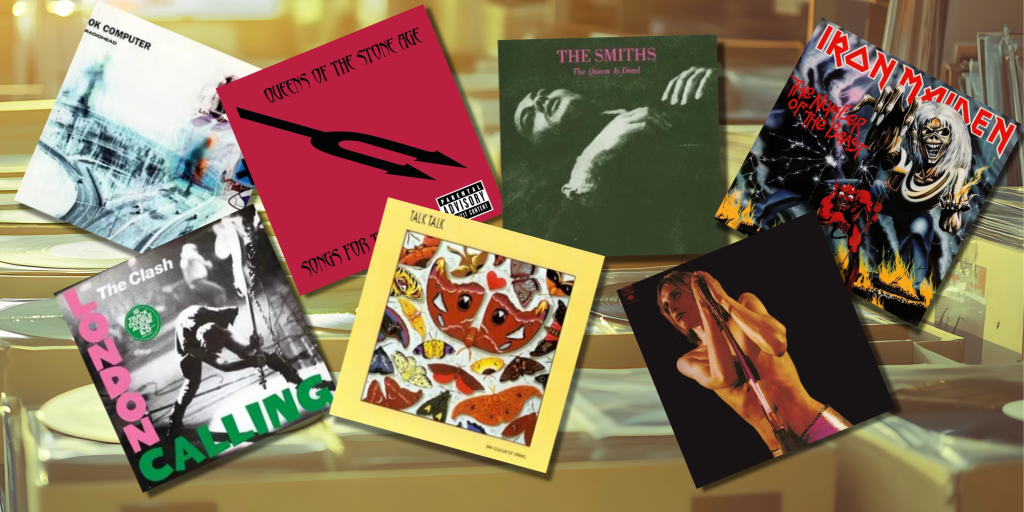
I’d heard of the band but given my penchant for the heavier stuff I never really bothered to give them a real listen, but something about the cover image of a weird collection of moths and butterflies caught my eye, so I wandered up to the counter with it in hand to give it a listen.
The owner of the store who was familiar with my usual purchase history gave me a bit of a quizzical look but chucked it on and selected his favourite track ” Lifes what you make it “
Now I always liked to keep an open mind about other styles of music, and I had friends who were into the whole New Wave/ Post Punk scene, more so with bands like Siouxsie and the Banshees, The Cure and New Order.
But hearing that track, I can honestly say it was one of those albums that definitely piqued my curiosity straight away. There was something really different about it, the way Mark Hollis played that percussive, bass driven piano rhythm that weaved through the song, and his strong vocal tone that helped create a dark melancholic feel to the lyrics. It was a quintessential 80s New Wave soundscape, so strong you could almost smell the cheap hair spray!
Nearly four decades later, it’s still one of the most essential pieces of vinyl in my collection, and this post explains why.
The Band That Refused to Stand Still
To understand why “The Colour of Spring” is such a landmark album, you need to know where Talk Talk came from. Mark Hollis, Paul Webb, and Lee Harris started out in 1981 as just another synth-pop band trying to ride the New Romantic wave.
Their debut “The Party’s Over” in 1982 was decent enough very much of its time with that glossy, processed sound that was “strictly commercial” as Frank Zappa once exclaimed, but you could definitely hear something unique brewing underneath.
By 1984’s “It’s My Life,” they were already pushing boundaries. That album gave us the massive hit single of the same name. On a personal side note I was only 11 when that song came out and I never really bothered to take much notice of it. To me it just had the feel of another 80s Teen movie soundtrack . I later learned that the production had a depth that most of their contemporaries lacked and I now realise why it was such a classic song, later covered by the band No Doubt.
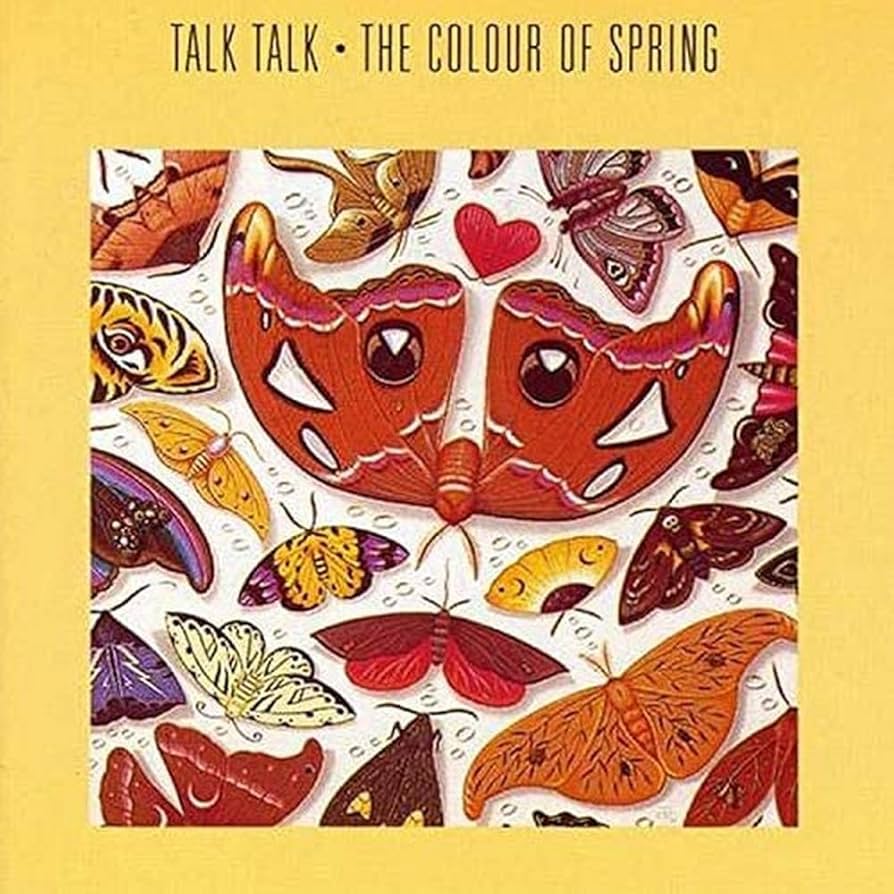
But it was really “The Colour of Spring” in 1986 that showed us what Talk Talk was truly capable of. And the connection between the album title, the imagery of the moths/ butterflies on the cover whether a deliberate attempt at symbolism or not, points to the fact that the band had come out of their chrysalis into a new beginning of creativity. Am I sounding like a vinyl collecting wanker yet?….. Right lets carry on.
The Pivotal Moment
“The Colour of Spring” represents Talk Talk at their absolute creative peak within the realm of accessible music.
This was their third album, and by this point, ( I have a theory about bands always hitting the mark at number 3. I might talk about that in another post ). Mark Hollis had found his voice, both literally and figuratively. The band was confident enough to experiment but still grounded enough to create something that connected with listeners.
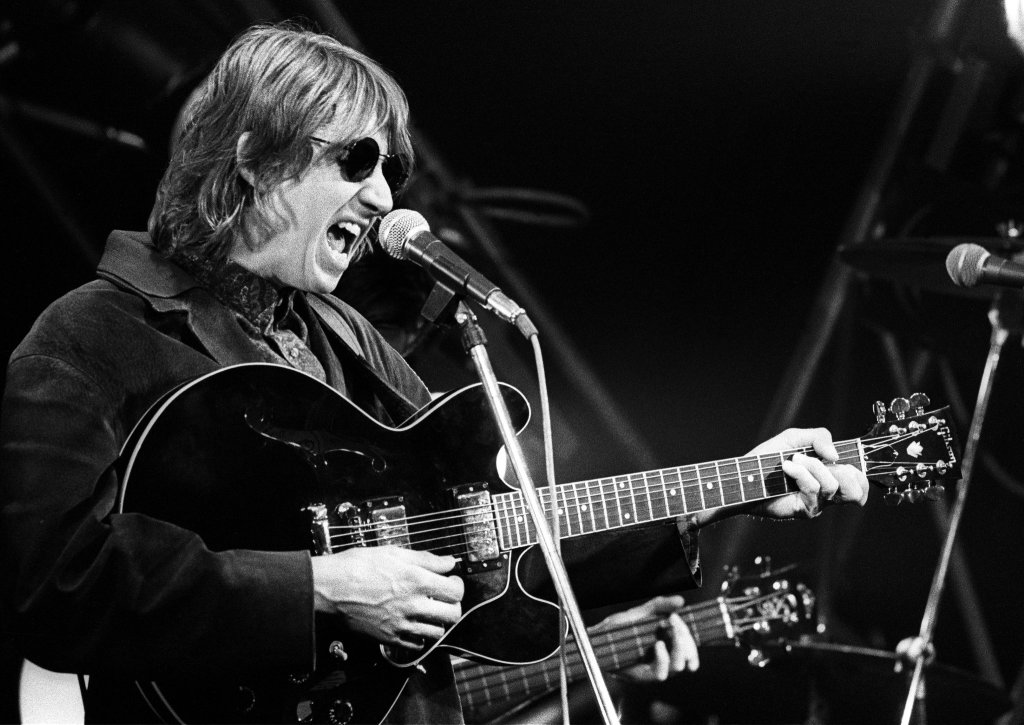
What makes this album so special is that it’s the perfect bridge between two worlds. On one side, you’ve got the immediate accessibility of new wave, those hooks that grab you on first listen. On the other side, you’ve got the artistic ambition that would eventually lead them to create the post-rock masterpieces “Spirit of Eden” and “Laughing Stock.” But let’s be honest, those later albums, brilliant as they are, aren’t exactly what you put on at a dinner party.
“The Colour of Spring” gives you both. It’s sophisticated enough to satisfy your inner music nerd but melodic enough that your non-collector friends won’t run screaming when you put it on, and to be fair I do have a few of those kinds of albums in my collection.
The sound that changed everything
Working with producer Tim Friese-Greene, Talk Talk created something that was genuinely innovative. This wasn’t just another band throwing a saxophone over a drum machine and calling it new wave. They were crafting these lush, atmospheric soundscapes that felt organic despite being built on synthesizers.
I remember the first time I heard “Happiness Is Easy” , that opening track just draws you in with its deceptive simplicity. It sounds almost effortless, but there’s so much happening underneath. The way they layered acoustic and electronic elements was revolutionary at the time. These days, everyone does it, but back in ’86, this was groundbreaking stuff.
And then there’s “Life’s What You Make It,” which became their biggest hit. I’ll admit, I was pretty oblivious to it when it was released and made an appearance on Countdown, Australia’s version of Top of the Pops. But a few years later when my taste had matured and I rediscovered it in my local record store I realised it was so much more. The production is immaculate, every sound has its place and nothing feels superfluous.
Why Every Collector Needs This Album
Here’s the thing about collecting, anyone can grab the obvious classics. We all have “Unknown Pleasures” and “Remain in Light” in our collections, well at least I do. But the real gems are the albums that show you something new every time you drop, er, place the needle. “The Colour of Spring” is one of those records.
I’ve owned three different pressings of this album over the years (the original EMI pressing, a nice Japanese pressing, and a recent remaster), and each time I play it, I hear something I missed before. Maybe it’s the way the bass sits in the mix on “I Don’t Believe in You,” or how Hollis’s voice floats over the arrangements on the title track. This is an album that rewards patience and attention.
From a collector’s perspective, it’s also historically significant. This album influenced an entire generation of musicians who would go on to create what we now call post-rock and ambient rock. You can draw a direct line from “The Colour of Spring” to bands like Radiohead, Sigur Rós, and countless others. It’s not just a great album, it’s a foundational text.
The Australian Connection
For those of us collecting in Australia during the 80s, Talk Talk was one of those bands that felt like a secret shared among music lovers. They weren’t massive here like they were in the UK, but they had a devoted following. I remember when I accidentally took a chance on this album because it happened to be in the wrong section, the feeing of excitement I felt that I had discovered something fresh and unknown on my early journey as a collector.
The album’s themes that search for meaning, the questioning of modern life, the tension between optimism and melancholy really resonated with the Australian music scene of the time. We were seeing our own artists like The Go-Betweens and The Church exploring similar territory, creating music that was both intelligent and emotional.
A definitive statement
What makes “The Colour of Spring” such a definitive moment for Talk Talk is that it captures them at the exact point where their ambition matched their ability to communicate that ambition. The later albums, as brilliant as they are, became increasingly abstract and challenging. The earlier albums, while enjoyable, were still finding their voice.
This is Mark Hollis as the reluctant poet, grappling with life’s contradictions but still willing to share those struggles with us. His lyrics on songs like “The Colour of Spring” are impressionistic but deeply felt. He’s not telling us what to think, he’s inviting us to think alongside him.
The tracks that matter
Every track on this album earns its place, but if I had to pick highlights for newcomers:
“Happiness Is Easy” sets the tone perfectly that sense of optimism tinged with uncertainty that runs through the entire album. “I Don’t Believe in You” showcases their mastery of dynamics, building from whispered intimacy to soaring release. “Life’s What You Make It” proved they could do mainstream without selling out their artistic vision. And the title track… well, that’s just pure magic.
Why it’s still relevant
Nearly 40 years later, “The Colour of Spring” hasn’t dated. The production still sounds fresh, the songs still connect emotionally, and the influence is still being felt. In an era where so many 80s albums feel trapped in their time, this one transcends its period.
For any serious collector, this album represents everything that was great about the 80s new wave scene, the willingness to experiment, the perfect marriage of technology and humanity, and the belief that popular music could be both accessible and challenging.
If you’re building a collection of essential new wave albums, “The Colour of Spring” isn’t just recommended, it’s absolutely indispensable. It’s the kind of album that reminds you why you started collecting in the first place: to discover music that moves you, challenges you, and reveals new depths with each listen.
Trust me, this one’s worth seeking out. Your collection and your soul will thank you for it.
So what about you?
Have you stumbled upon an album that you never thought you would like, but ended up loving it? Or maybe you already have a copy of Colour of Spring in your collection and think I have missed something, let me know in the comments.




 Rhythm Exchange Records
Leave a comment