
Look, I get it. You’ve caught the vinyl bug, haven’t you? Maybe you picked up a few records at a garage sale, or your mate showed off their collection, and now you’re hooked. But then you start looking at turntable prices online and suddenly you’re wondering if you need to sell a kidney just to play some records properly.
Here’s the deal, yeah, the high-end stuff costs more than my first car, but you don’t need to blow your life savings to get something that actually sounds good. I’m talking way better than that plastic suitcase thing you might have grabbed off Amazon in a moment of weakness (we’ve all been there, no judgment).
After plenty of trial and error, and maybe a few questionable purchases I’d rather not discuss, I’ve figured out how to put together a solid setup that won’t have you eating two minute ramen for the next six months.
First things first: Get yourself a proper turntable
Alright, let’s talk turntables. You’re going to want something from Audio-Technica because honestly, these guys have been making decent, affordable turntables since before vinyl was cool again. The Audio-Technica LPW30TK is where I’d start if I were doing this all over again.
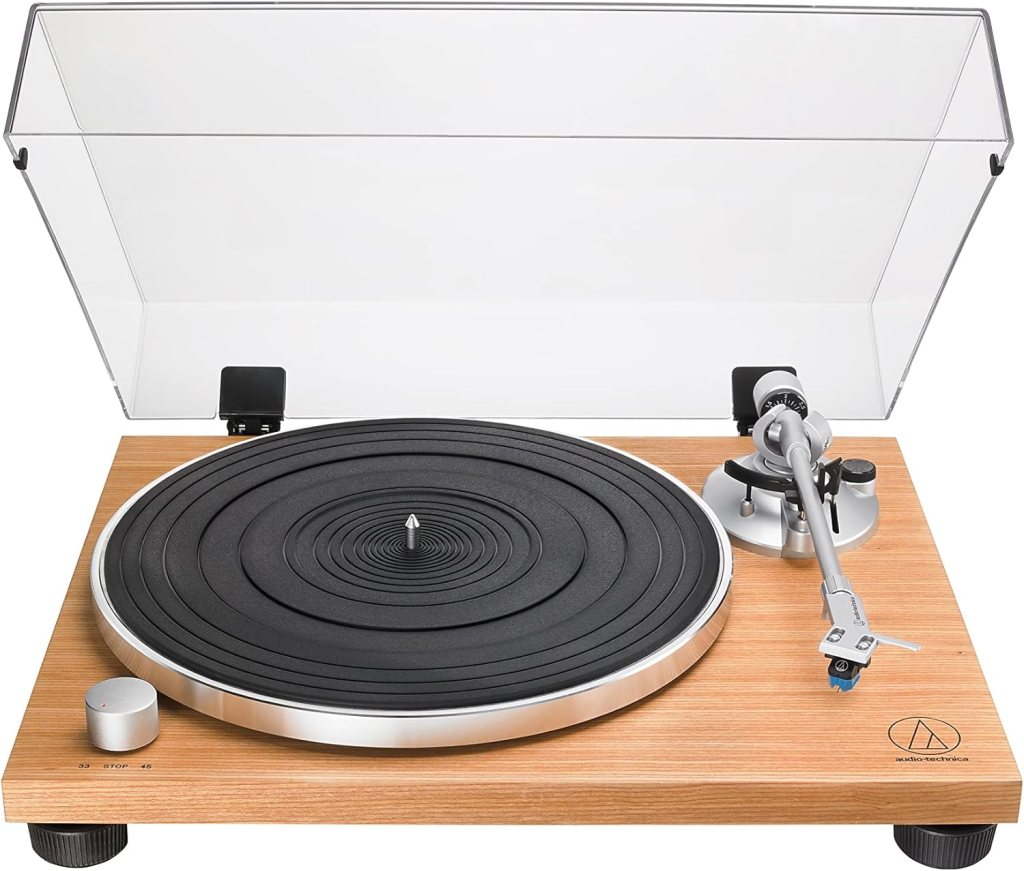
It’s just over 500 bucks Australian, which I know sounds like a lot compared to that $80 plastic thing, but hear me out. This is a proper belt-drive turntable that’ll treat your records with some respect.
Here’s what you’re getting: it’s fully manual, so you’ll actually need to put the needle on the record yourself and lift it off when it’s done. Sounds old school? That’s because it is, and that’s exactly the point. You get both 33⅓ and 45 RPM speeds, so you can play everything from your dad’s old Led Zeppelin records to those quirky 7-inch singles you’ve been collecting.
The anti-skate control is adjustable, which is just a fancy way of saying it helps keep your needle tracking properly in the groove. It comes with an AT-VM95C cartridge that’s actually pretty decent out of the box, but here’s the cool part, if you upgrade it later you’ll get blown away by how much it can change the sound quality!
The tonearm has this hydraulic lift thing going on, which basically means you won’t accidentally slam the needle down onto your favorite record like some kind of vinyl-destroying monster. Plus, there’s a locking rest so the tonearm won’t go flying around when you’re not using it, great for preserving your stylus, those things can get damaged surprisingly easy, and yes I’ve learned this the hard way.
But here’s the real kicker, it’s got a built-in preamp. That means you can skip buying an amplifier right away and just plug it straight into some powered speakers. Boom, instant savings!
Level up your game: The Fosi audio ZA3 amplifier
Now, if you’re thinking bigger picture, and trust me, once you start down this rabbit hole, you will be, you’ll want to grab a proper amplifier. This is where I tell you about Fosi Audio. These guys have been quietly making some seriously good budget gear that doesn’t sound like budget gear, and by all accounts from the Youtube Hifi Gurus, they really live up to their reputation.
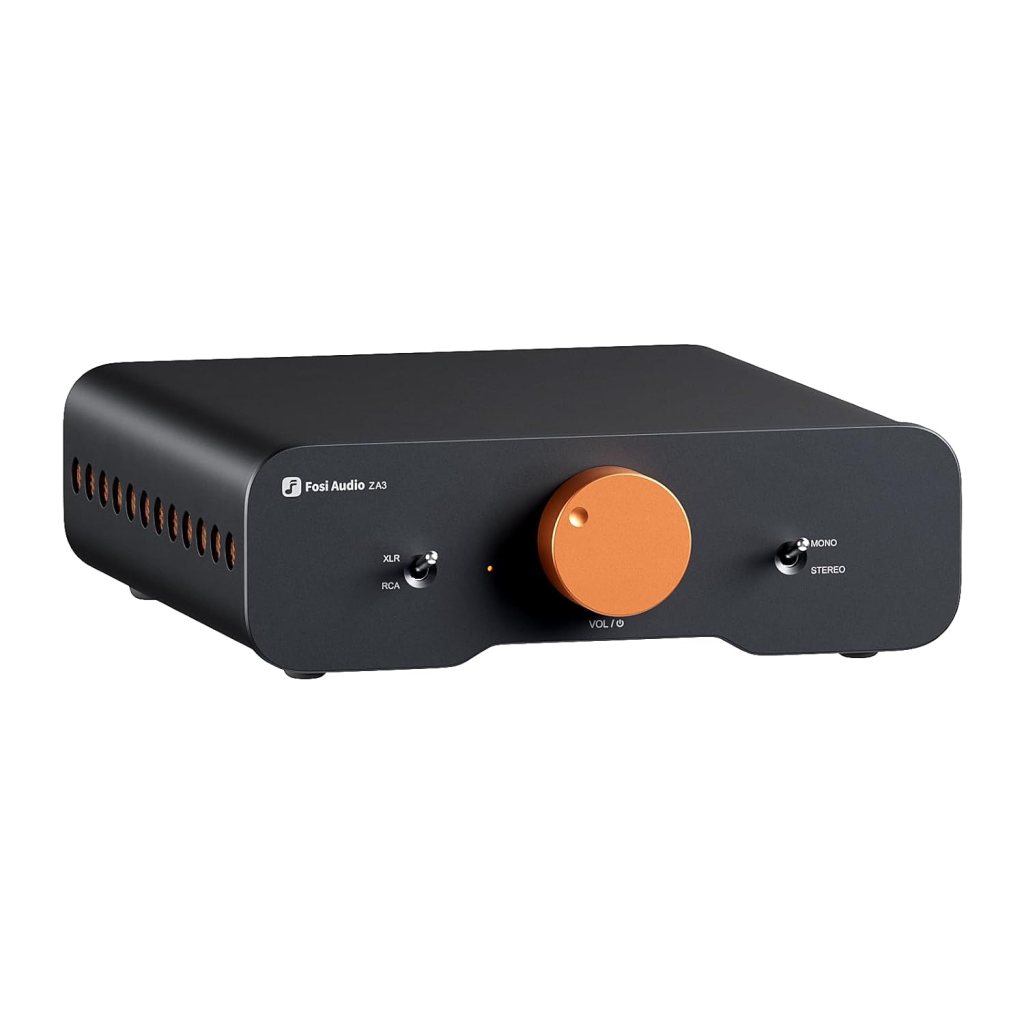
The Fosi Audio ZA3 is basically the Swiss Army knife of amplifiers. This little beast can run in stereo mode pumping out 180W, or you can switch it to mono mode and get 235W. Feeling ambitious? Buy two of them, run them in mono, and you’ve got yourself a setup that’ll make your neighbors question their life choices.
Here’s where it gets nerdy in a good way, it’s got balanced inputs (both XLR and ¼” jacks), which means way less noise and interference. You know that annoying hum you sometimes get with cheap gear? Yeah, this pretty much eliminates that.
They’ve packed this thing with proper audiophile components too. We’re talking premium Japanese and German capacitors, high-end amplifier chips, the works. The signal-to-noise ratio is impressive, and the noise floor is so low you’ll actually hear silence between tracks instead of that constant background hiss.
And get this, you can swap out the op-amps to change how it sounds. Want warmer bass? Different op-amp. Want more sparkly highs? There’s an op-amp for that too. It’s like having a custom-tuned amplifier without paying custom prices.
Speakers that won’t break the bank: Polk audio MXT15
For speakers, I’m going to point you toward the Polk Audio MXT15 bookshelf speakers. Now, before you start thinking “bookshelf speakers are tiny and probably sound terrible,” let me stop you right there.
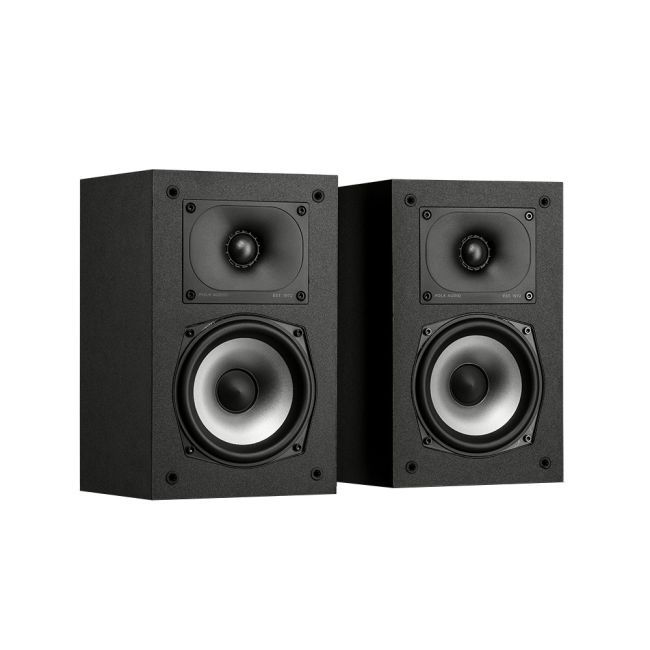
These little guys punch way above their weight class. They’re rated at 40 watts, which isn’t going to wake the dead, but they’ll fill your room with seriously clear, detailed sound. Perfect for late night listening sessions when you’re discovering some hidden gem from your collection.
What really surprised me about these speakers is how wide the soundstage is. You know that feeling when you put on a great record and it sounds like the band is actually in your room? These speakers deliver that in spades.
And here’s a pro tip from someone who’s been down this road: if you ever decide to add a subwoofer later on, these speakers become absolutely magical. They handle the mids and highs beautifully, and when you let a dedicated sub take care of the bass, the whole system just comes alive.
The reality check: What’s this going to cost me?
Okay, moment of truth time. I loaded all this gear into my Amazon cart, held my breath, and… just over $1,000 Australian dollars. That’s roughly $650 USD or £480 if you’re across the pond.
Now, I know a grand sounds like serious money, but think about it this way, this is a complete system that’ll give you years of listening pleasure and actually do justice to those records you’ve been collecting. Plus, every single component here has room to grow. Start with the turntable and powered speakers, add the amp later. Upgrade the cartridge when you get serious. Add a subwoofer when the neighbors move out.
The best part? This isn’t throwaway gear that you’ll want to replace in six months. This is the foundation of a system that can evolve with your taste and budget. Your records deserve better than a plastic turntable, and honestly, so do you.
The bottom line
Look, I could have recommended some flashy, expensive gear that would’ve cost you three times as much, but where’s the fun in that? This setup gives you genuine hifi sound without the premium price tag, and it leaves plenty of room in your budget for what really matters, buying more records!
Trust me, once you hear your favorite album played through a proper setup like this, there’s no going back to the plastic fantastic. Your ears will thank you, your records will thank you, and your bank account… well, it won’t hate you quite as much as it could have.
Hey, have you already got a decent set up? Or maybe you have been starting out and been checking out some of the gear I mentioned in the blog. I’m always keen to hear what other people have found out there, I mean I’m no expert on hifi but I’ve been around it long enough to know what sounds good and what works.
Why not drop me a comment below and tell me your thoughts, I’d love to hear from you.



 Rhythm Exchange Records
Leave a comment