I started collecting vinyl in an era when it wasn’t cool, trendy, or Instagram-worthy. It was just the only decent option.
CDs were starting to dominate, but they sounded sterile to my ears. Cassettes were unreliable garbage that would inevitably get eaten by your car stereo at the worst possible moment. So vinyl it was. Not because it was retro or collectible. Because it was simply the best way to listen to music.
Fast forward to 2026, and suddenly vinyl collecting is everywhere. It’s trendy. It’s expensive. And honestly? A lot of it doesn’t make sense to me anymore.
The Vinyl Market in 2026: Numbers That Don’t Lie
Let’s talk about what’s actually happening in the vinyl world right now.
The global vinyl record market, valued at $2.42 billion in 2025, is projected to reach $5.06 billion by 2032 with an 11.1% compound annual growth rate. Compare that to cassette tapes with a mere 2.9% growth rate, and you can see why vinyl has become the dominant physical music format.
In France alone, more than 5.4 million vinyl records were sold in 2023, representing 45% of the physical music market. This isn’t just nostalgia, it’s a full-blown cultural movement.
But here’s what’s interesting: the profile of buyers has shifted dramatically, with a new generation mainly composed of 18-35 year olds embracing this format. These aren’t people who grew up with vinyl. They’re digital natives choosing analog.
I was in my local record store last weekend, doing what I always do: flipping through second-hand bins, hunting for whatever’s currently on my ever-changing want list. And I started wondering: why is vinyl popular again in 2026?
More specifically, what makes someone decide to start collecting vinyl records when streaming is free, digital files sound objectively better (yes, I said it, we can fight about that in the comments), and a decent turntable setup costs more than most people’s monthly rent?
The Real Cost of Vinyl Collecting in 2026
Let’s be brutally honest about the economics here.
Modern vinyl collecting is expensive. Exorbitant, even. New releases regularly hit $45-$90 AUD. Reissues of classic albums cost more than they did when they first came out (adjusted for inflation). You need:
- Space to store them properly
- Climate control so they don’t warp
- Proper equipment to play them without destroying them (if you’re starting out, here’s how to build an affordable HiFi setup that actually sounds good)
- A tolerance for the fact that yes, vinyl technically sounds slightly worse than a FLAC file
So why bother?
Well, if you’re like me, you’re probably in it for the thrill of the hunt, that dopamine hit when you find a first pressing in the dollar bin, the ritualistic satisfaction of dropping a needle on Side A, or just the forced slowdown that happens when you can’t skip tracks with a tap.
But I’ve been observing some interesting patterns in how people collect these days, and I have questions. Genuine, slightly uncomfortable questions about the psychology behind our collecting habits.
So let’s talk about the four main types of vinyl collectors I see in 2026, and if you collect differently than I do, please tell me I’m wrong in the comments.
Collector Type 1: The Investment Flippers
Right off the bat, let’s address the elephant in the record store: people who treat vinyl like a stock portfolio.
You know exactly who I’m talking about. The collectors who snap up every limited edition drop at retail, never open them, then flip them on Discogs six months later for triple the price when actual fans are desperately searching for copies.
The Record Store Day Phenomenon
Record Store Day has become ground zero for vinyl flipping, with resellers camping overnight for albums they’ve never heard solely because the internet said they’ll be “worth something”. The 2025 events featured everything from Taylor Swift 7-inch exclusives to ultra-limited Bob Dylan rarities, with quantities as low as 1,985 units for some releases.
Major releases like the Wicked soundtrack and Harry Potter vinyl soundtracks became instant flip targets, with resellers expecting “easy profits in the next few weeks”. This isn’t collecting, it’s speculative trading with a different commodity.
Does Vinyl Investment Actually Work?
Here’s where it gets interesting. In 2026, vinyl records are increasingly being viewed not just as nostalgic collectibles but as a legitimate alternative asset class. Some rare pressings genuinely do appreciate. Notable 2025 sales included a Led Zeppelin Classic Records 45RPM box set and early Velvet Underground acetates fetching thousands at auction.
But here’s my question: if you’re buying records you never intend to play, are you actually collecting vinyl, or are you just playing the resale game with a different commodity?
Look, I understand capitalism. I get supply and demand. But this genuinely bothers me because it’s turned vinyl collecting into a speculative market where scarcity is artificially manufactured and exploited. It makes vinyl more expensive for everyone else and transforms music into a commodity rather than art.
And if you started out collecting for the music but drifted toward the investment side, what happened? When did the spreadsheet become more exciting than the music?
I’m genuinely asking because from where I’m sitting, that sounds exhausting and joyless. But maybe I’m missing something. Maybe there’s a thrill in watching your collection appreciate in value that I just don’t get.
Investment collectors: Defend yourself. Does it actually work, or are you just convincing yourself that hoarding sealed records in your closet is somehow profitable?
Collector Type 2: The Variant Completists
Okay. Deep breath. This is where I have to admit I might be a hypocrite because I own four different pressings of Pink Floyd’s The Dark Side of the Moon.
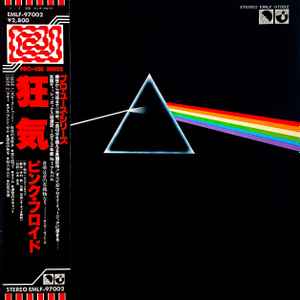
But at least my copies sound different, right? Japanese pressing, German pressing, UK original, US reissue. Different masterings, different plants, actually different listening experiences and sound quality.
The Colored Vinyl Con
What I’m talking about is the modern phenomenon of buying the same album in seventeen different colors because the record label decided to print it on baby blue, “coke bottle clear,” pink marble, splatter, and whatever else they can dream up to separate you from your money.
Let’s be real: this is a con, and we’re all falling for it.
Record companies have figured out that super-fans will buy multiple copies of the same pressing if you make it a different color. Same master, same plant, same audio quality, but hey, this one’s translucent pink.
Limited-edition pressings, colored variants, and intricate album artwork have made vinyl a collectible item, but the collectibility is manufactured, not organic. The “scarcity” is artificial.
And don’t even get me started on the tactics:
- “Only 500 pressed on mint green!”
- “Only available at Target!”
- “Only available if you complete this scavenger hunt through our website!”
The Uncomfortable Question
I’m not telling you how to spend your money. If collecting vinyl variants brings you joy, genuinely great. But can we at least acknowledge that we’re being played? That owning the same album in eight colors doesn’t actually give you eight different listening experiences?
So variant collectors, I’m asking: What’s the actual appeal here?
- Is it the aesthetic of seeing them lined up on your shelf?
- The completist satisfaction of “catching them all”?
- FOMO?
- Or have you genuinely convinced yourself that the translucent orange pressing sounds warmer than the opaque black one?
Because from where I’m standing, this looks less like collecting and more like conspicuous consumption with extra steps.
Collector Type 3: The Reissue-Only Buyers
Here’s where I’m going to lose some of you, but someone needs to say it: if you only buy brand-new reissues, you’re probably not getting the vinyl experience you think you’re paying for.
I get the appeal. New vinyl is pristine, readily available, and doesn’t require you to learn grading standards or gamble on whether that VG+ copy on Discogs is actually VG+ or some seller’s wishful thinking. When you’re just starting your vinyl journey, “buy new” seems like the safe, obvious choice.
The Digital Source Problem
But here’s the uncomfortable truth: Most modern reissues are sourced from digital files, not the original master tapes, sometimes literally from CD rips.
You’re paying $60 AUD for a format that’s theoretically superior to digital, but you’re getting a digital source pressed onto vinyl. Do you see the problem here?
This isn’t elitism or gatekeeping, it’s just physics. If you’re collecting vinyl because you want that “warm analog sound” everyone talks about, you’re not getting it from a 2026 reissue of a 1973 album that was mastered from an MP3. You’re getting a very expensive, inconvenient CD.
The Exception That Proves the Rule
Now, before you rage quit this post, yes, there are exceptions. Labels like Analogue Productions, Music Matters, and Rhino do proper reissues from original masters. But they’re the exception, not the rule.
Most reissues are cheap cash-grabs trading on nostalgia and the vinyl trend. The rise in popularity of events such as Record Store Day has created forced rarity of some reissues and given rise to “flippers” who buy up multiple copies and resell at vastly inflated prices.
My Controversial Advice
Here’s what I think newer collectors miss: a well-maintained original pressing from the ’70s or ’80s will almost always sound better than a modern reissue, even if it has a few surface pops.
Those “imperfections” are part of a genuine analog chain. That’s actual tape hiss from the master, actual needle-to-groove physics. It’s real.
So my advice (and yes, it’s advice, not just a question this time):
- Get over your fear of used vinyl
- Learn to grade records using resources like Discogs
- Accept that you might get burned once or twice
- Stop overpaying for inferior digital-sourced reissues just because they come in shrink wrap
Use sites like Discogs to confirm variants and check the dead wax (runout groove) for matrix numbers to identify pressing versions, this will often give you a better idea of rarity as well as average price.
Or don’t. Keep buying new if it makes you happy. But at least know what you’re actually getting for your money.
Reissue-only collectors: Why? Convenience? Fear of the unknown? Or do you genuinely think that 2026 pressing sounds as good as the original?
Collector Type 4: The “Top 100” Checklist Collectors
Okay, this is where I’m really going to ruffle some feathers, so buckle up.
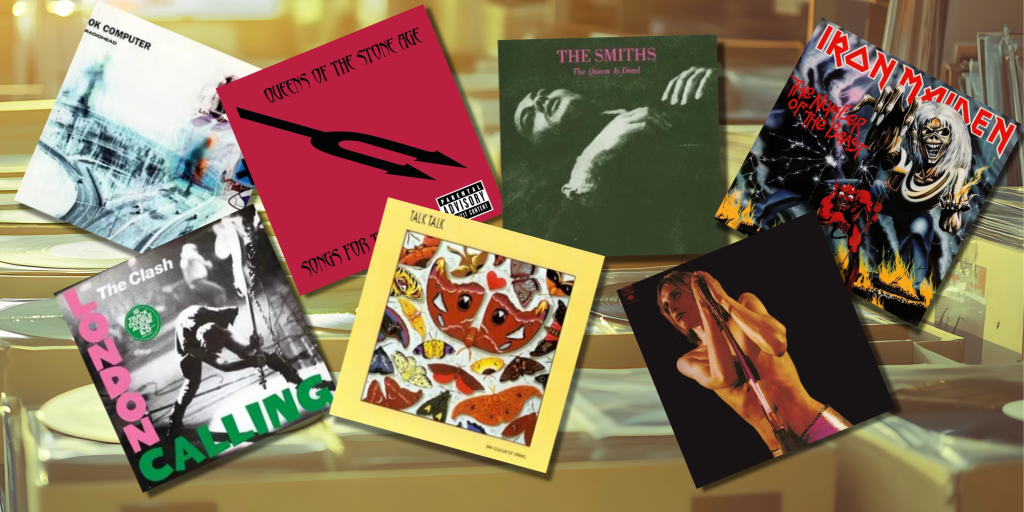
I’ve seen a lot of collections, both online and in person, that look suspiciously like someone just worked their way down a “Greatest Albums of All Time” list and called it a day.
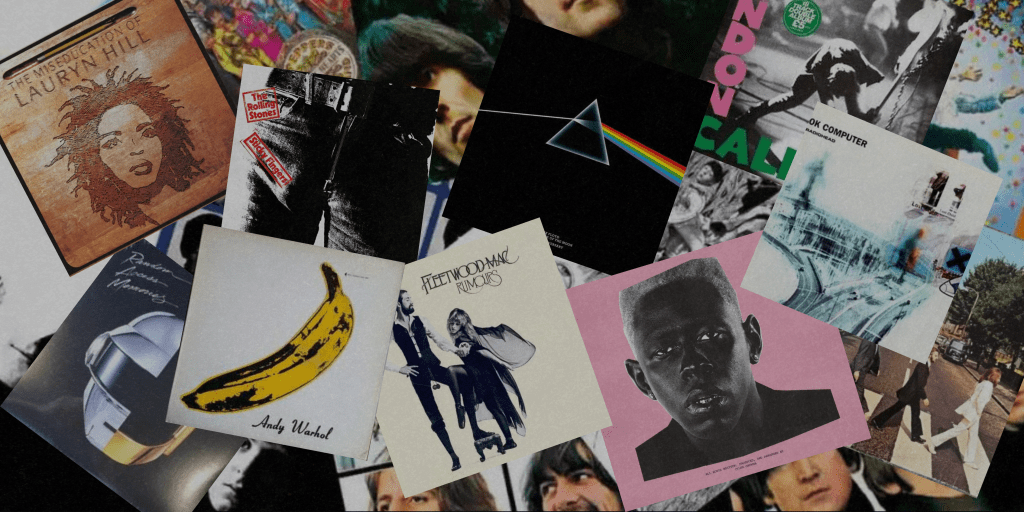
You know the type:
- Abbey Road
- OK Computer
- Thriller
- Rumours
- The Miseducation of Lauryn Hill
- Every single Beatles album
- Dark Side of the Moon
- Random Access Memories for good measure
Now, it’s theoretically possible that someone’s genuine, organic music taste perfectly aligns with Rolling Stone’s editorial picks. Maybe you really do love all those albums equally and discovered each one through a deep personal journey.
Maybe.
The Instagram Aesthetic Collection
But let’s be honest: a lot of this is performative, isn’t it?
Vinyl collecting has become a lifestyle aesthetic, and certain albums are basically required props for the Instagram photo. The question isn’t “Do I like this album?” it’s “What does owning this album say about me?”
You’re not building a music collection, you’re curating a personality.
The nostalgic appeal continues to be a prominent characteristic of vinyl popularity, with the “aesthetic” and “vintage” coveting of Gen Z shown in social media applications like Pinterest and TikTok, with record players in bedroom décor videos and dorm walls covered in album covers.
The Honest Question
Look, I’m not claiming moral superiority here. My collection is a chaotic mess of legitimately uncool albums mixed in with the classics. I have deeply embarrassing records in there. But at least it’s actually mine, a genuine map of my terrible, eclectic taste, not a facsimile of what a “serious music fan” is supposed to own.
So here’s my uncomfortable question: How much of your collection is music you actually love, and how much is music you feel like you should own?
- When you bought that copy of Pet Sounds, was it because it moved you, or because every vinyl collecting guide told you it’s essential?
- Did you genuinely connect with The Velvet Underground & Nico, or does it just look cool on your shelf?
- Have you actually listened to all four sides of The White Album, or is it there for credibility?
There’s no wrong answer, but there might be an honest one you’re avoiding.
If your collection looks exactly like a critical consensus checklist, I’m not saying you’re fake. I’m just saying… maybe examine that a little. The best collections are the ones that are weird, personal, and a little embarrassing. That’s where the real music lives.
Why Do You Really Collect Vinyl in 2026?
Here’s the thing: I don’t actually think there’s a “wrong” way to collect vinyl.
If investment flipping makes you happy, fine. If you want every color variant of your favorite album, go for it. If you only buy reissues because used records stress you out, I get it. And if your collection is entirely composed of critically acclaimed classics, well, those albums are acclaimed for a reason.
But I do think it’s worth interrogating our own motivations sometimes.
The Psychology Behind the Revival
Research shows that vinyl collection is now seen as a form of “digital detox” that many music lovers search for in the current digital age. Vinyl records offer a ritualistic connection to music, holding a record, admiring the cover art, and placing it on the turntable create an experience that streaming simply can’t replicate.
Gen Z, the first generation to grow up entirely in the digital age, is increasingly aware of the ephemeral nature of digital media, with vinyl offering a slower, more intentional way to engage with music.
With streaming, music becomes background noise, something we skip, shuffle, or play while scrolling on our phones. Vinyl changes that, forcing you to slow down and listen from start to finish.
Why I Still Collect (Despite Everything)
For me, collecting vinyl is about tangibility in an increasingly intangible world. It’s about being forced to slow down and listen to a full album instead of skipping through playlists. It’s about the unreasonable joy of finding a record I’ve been hunting for years in some random shop in a town I’m just passing through.
It’s about physicality and ritual and occasionally, when I’ve actually managed to find a proper pressing, genuinely superior sound quality.
But that’s just me. I want to know about you.
Join the Conversation
Are you being honest with yourself about why you collect?
Are you becoming performative about your hobby and losing sight of what made you fall in love with music in the first place?
Tell me in the comments:
- Which collector type are you?
- Why do you collect vinyl in 2026?
- What drives your buying decisions?
- If I’ve completely misread your collector type, tell me why I’m wrong
I’m genuinely curious. And maybe through this conversation, we can all figure out what this whole vinyl revival is actually about—or at least have a good argument about it.
Drop a comment. Defend your choices. Explain your logic. Tell me I’m a snob, a hypocrite, or that I’m missing the point entirely.
Happy hunting (or hoarding, or investing, or whatever you’re calling it these days).
Related Reading:
- I Quit Trying to Be a Vinyl Influencer (And Started Actually Enjoying Records Again) – On performative collecting and reclaiming the joy
- How to Build an Affordable HiFi Setup That Actually Sounds Good (2026 Guide) – For those starting their vinyl journey





Leave a Reply